

One of the challenges in child-centered play therapy is creating measurable objectives that satisfy managed care requirements while still leaving room for the deeper therapeutic work happening in the playroom.
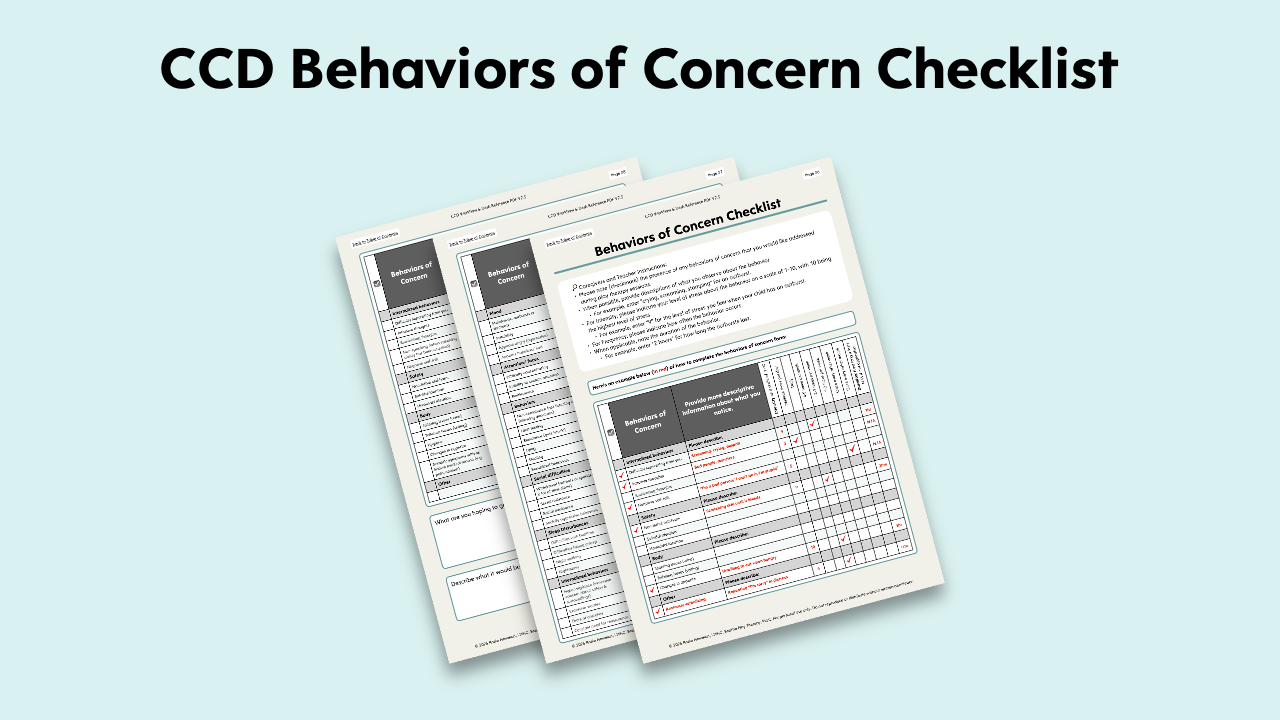
The Behaviors of Concern Checklist, part of the Child-Centered Documentation (CCD) framework, helps gather observable data to create measurable symptom objectives for therapy. Originally suggested by a participant during an early CCD training, it quickly became a core part of the framework.
Before intake—or as part of intake—having caregivers complete the Behaviors of Concern Checklist helps shift broad concerns into concerns that are observable and measurable.
For example, a caregiver may report:
The checklist helps narrow those concerns and gather the information needed to answer four questions:
The first question helps connect the presenting concern to diagnosis and medical necessity. The remaining questions gather the measurable data needed to create SMART (specific, measurable, attainable, realistic, and timely) objectives required by many funding sources.
Using the caregiver's observations, the concern may be identified as:
The Behaviors of Concern Checklist essentially gathers all of the information needed to create a measurable symptom objective. That information can then be used to develop an objective:
Decrease excessive worries and ruminative thoughts ("she worries about everything," "she asks the same questions over and over," and "she can't stop thinking about things that might happen") from multiple times per day to once per day and from an intensity of 9/10 to 6/10, per caregiver report.
A simple formula is:
Decrease [behavior] (using caregiver quotes and examples) from X frequency to Y frequency and from X intensity to Y intensity, per caregiver report.
Within the CCD framework, treatment planning is organized into two lanes: symptom objectives and growth objectives. The caregiver tracks progress on symptom and behavioral objectives during monthly caregiver sessions using the Behaviors of Concern Checklist, while the therapist tracks progress toward growth objectives in the playroom, such as self-regulation, sense of self, flexibility, confidence, and relational safety.
These two lanes work together because the theory of change in child-centered play therapy is that internal growth leads to behavioral change. Together, they meet managed care requirements while preserving the heart of CCPT.
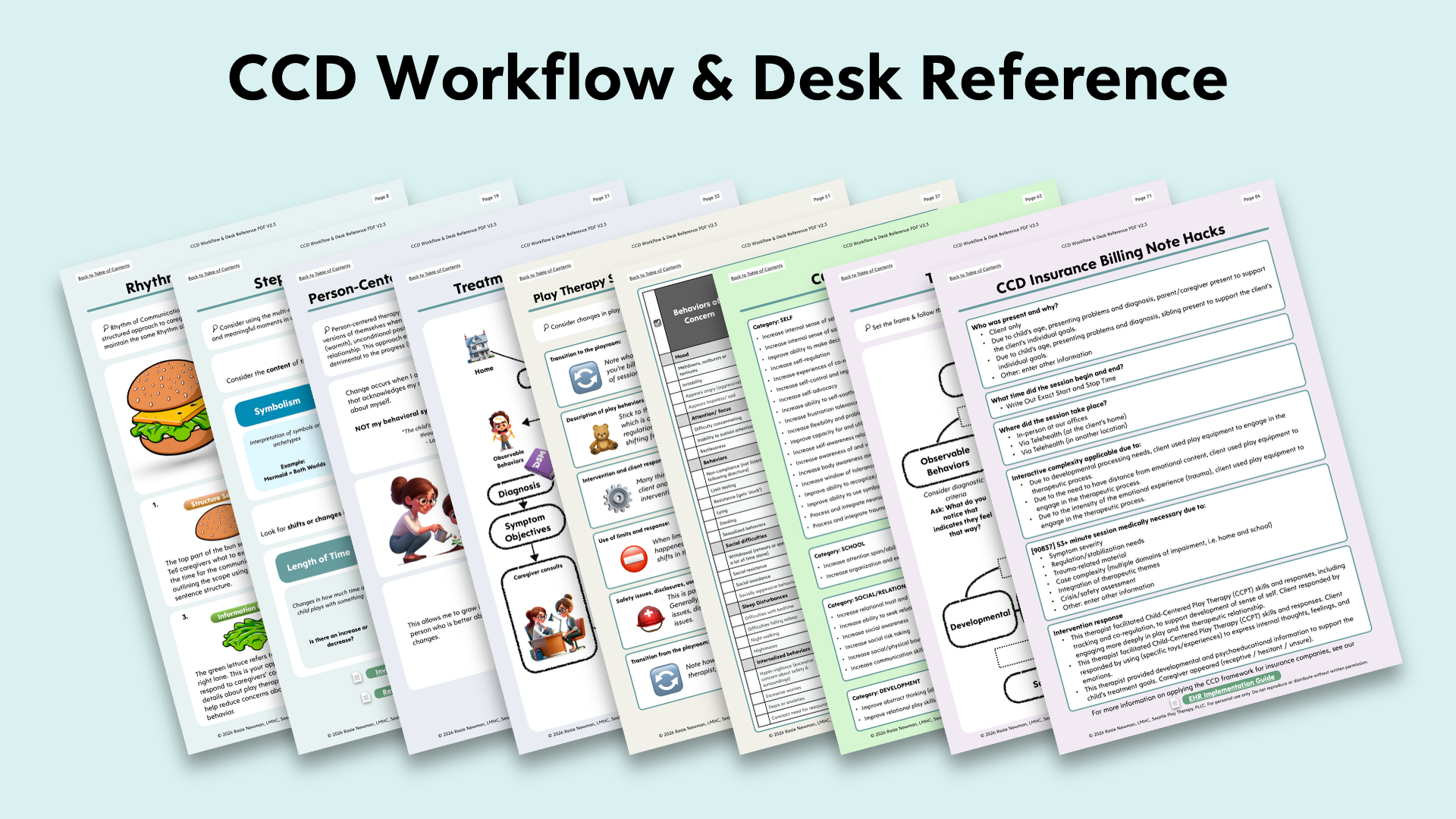
To learn more about the CCD framework and how to gather information during intake, explore the CCD Workflow & Desk Reference. Or start with the Behaviors of Concern Checklist and begin adding measurable objectives to your CCPT treatment plans.
The Behaviors of Concern Checklist, part of the Child-Centered Documentation (CCD) framework, helps gather observable data to create measurable symptom objectives for therapy. Originally suggested by a participant during an early CCD training, it quickly became a core part of the framework.
Before intake—or as part of intake—having caregivers complete the Behaviors of Concern Checklist helps shift broad concerns into concerns that are observable and measurable.
For example, a caregiver may report:
- "She worries about everything."
- "She asks the same questions over and over."
- "She can't stop thinking about things that might happen."
The checklist helps narrow those concerns and gather the information needed to answer four questions:
- What behavior are you noticing?
- How often is it happening?
- How intense is it?
- How long does it last?
The first question helps connect the presenting concern to diagnosis and medical necessity. The remaining questions gather the measurable data needed to create SMART (specific, measurable, attainable, realistic, and timely) objectives required by many funding sources.
Using the caregiver's observations, the concern may be identified as:
- Behavior: Excessive worries and ruminative thoughts
- Frequency: Multiple times per day Intensity: 9/10
- Duration: Up to one hour
The Behaviors of Concern Checklist essentially gathers all of the information needed to create a measurable symptom objective. That information can then be used to develop an objective:
Decrease excessive worries and ruminative thoughts ("she worries about everything," "she asks the same questions over and over," and "she can't stop thinking about things that might happen") from multiple times per day to once per day and from an intensity of 9/10 to 6/10, per caregiver report.
A simple formula is:
Decrease [behavior] (using caregiver quotes and examples) from X frequency to Y frequency and from X intensity to Y intensity, per caregiver report.
Within the CCD framework, treatment planning is organized into two lanes: symptom objectives and growth objectives. The caregiver tracks progress on symptom and behavioral objectives during monthly caregiver sessions using the Behaviors of Concern Checklist, while the therapist tracks progress toward growth objectives in the playroom, such as self-regulation, sense of self, flexibility, confidence, and relational safety.
These two lanes work together because the theory of change in child-centered play therapy is that internal growth leads to behavioral change. Together, they meet managed care requirements while preserving the heart of CCPT.
To learn more about the CCD framework and how to gather information during intake, explore the CCD Workflow & Desk Reference. Or start with the Behaviors of Concern Checklist and begin adding measurable objectives to your CCPT treatment plans.
Get the tools to help you thrive.

Created with