
The CCD framework allows caregivers and therapists to assess progress in different but complementary ways. Caregivers track symptom objectives during monthly caregiver sessions, providing measurable data about changes in frequency, intensity, and duration of behaviors. Therapists track growth objectives in the playroom by observing shifts in symbolic play, relational patterns, self-regulation, flexibility, confidence, and sense of self.This distinction helps caregivers focus on the behaviors that brought them to therapy, while allowing therapists to remain grounded in the play process and the child's internal growth. For more on creating measurable symptom objectives, see the blog post How to Create Measurable Objectives in Child-Centered Play Therapy.One of the challenges of child-centered play therapy is explaining progress when change does not always look the way caregivers, schools, or managed care systems expect it to look.
In the playroom, progress is often subtle. It may appear as a shift in play, a new way of involving the therapist, increased flexibility while creating artwork, or a child approaching a familiar theme differently than before. In the playroom, progress is often subtle. It may appear as a shift in play, a new way of involving the therapist, increased flexibility while creating artwork, or a child approaching a familiar theme differently than before.
As child-centered play therapists, we often recognize these moments as signs of growth, but may struggle to translate them into language that connects internal growth with the behavioral changes caregivers, schools, and managed care systems are looking for.
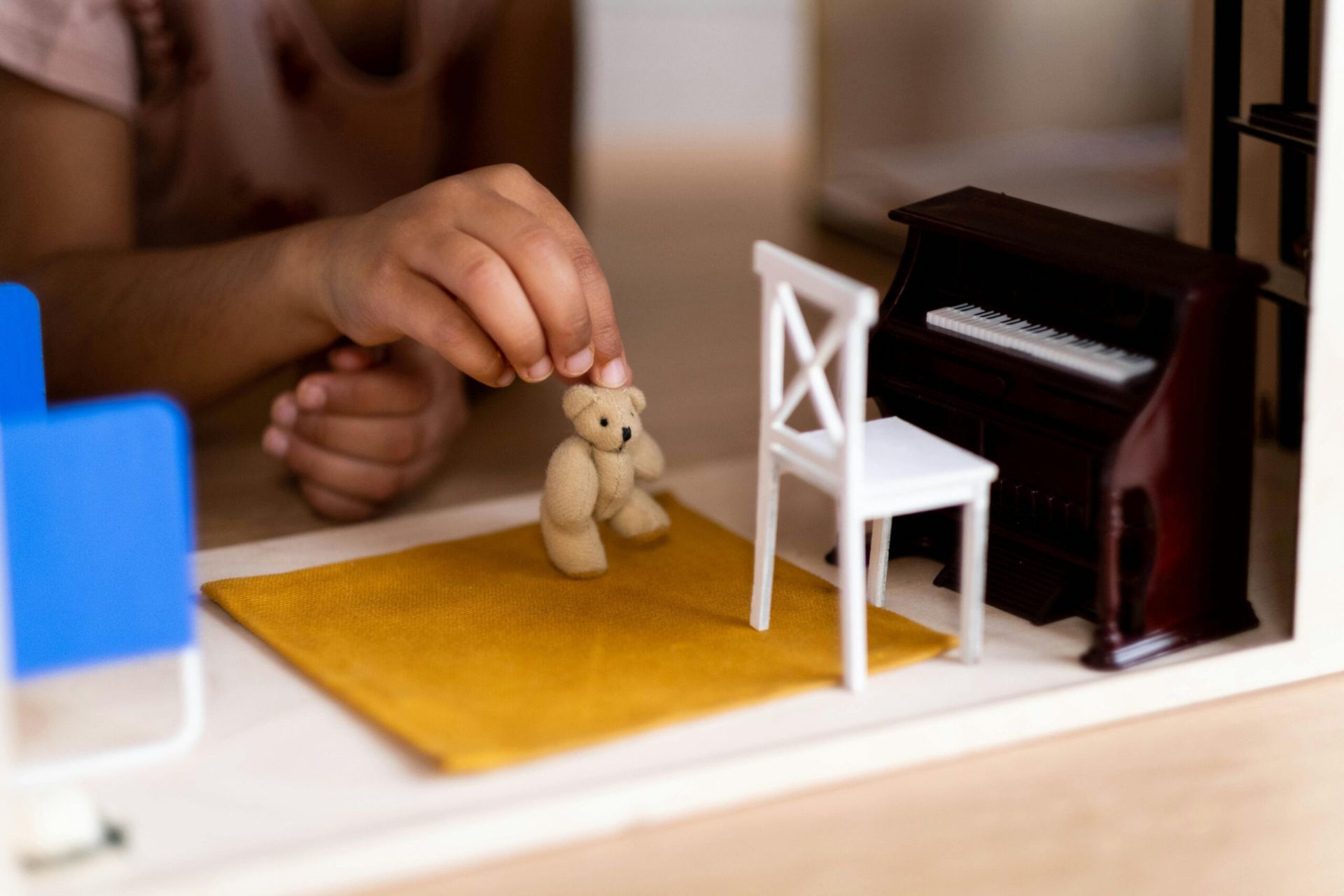
Recently, a child entered the playroom with unusual hesitation. In previous sessions, she would rush to the dollhouse and create elaborate scenes. Two child figures lived in separate rooms. One room was filled with art supplies and books. The other was centered around homework and technology.
But this session was different. Rather than immediately setting up the familiar scene, she spent time looking around the room before eventually returning to the dollhouse. This time, she created a single room for one child. Art supplies and technology were placed together throughout the space.
Reading it on paper, it may not seem particularly remarkable. Yet in the moment, it felt meaningful. For months, these interests had been represented by separate characters living in separate spaces. Now they existed together in one room, belonging to one child.
From a child-centered perspective, moments like this may reflect increased integration and a stronger sense of self. We cannot know exactly what the play means to the child, but we can observe that something shifted. The play looked different than it had before.
What stood out most was that the change emerged naturally from the child's own process. There was no interpretation, prompting, or direction from the therapist. Instead, it reflected one of the central assumptions of child-centered play therapy: that given the right therapeutic conditions, children move toward growth, integration, and greater self-acceptance in ways that are often communicated symbolically through play.
When we begin noticing these subtle shifts as evidence of internal growth, it helps us stay connected to the child-centered theory of change: internal growth often precedes behavioral change.
This is one of the reasons the Child-Centered Documentation (CCD) framework separates progress into two pathways:
Using the CCD framework, this moment might be documented as progress toward increased sense of self, evidenced by a shift in symbolic play from two separate child figures representing different interests to one integrated figure engaging in both.
When therapists intentionally track internal growth alongside symptom change, progress becomes easier to recognize and communicate.
Over time, noticing these small moments helps therapists identify progress that might otherwise be missed, provide caregivers with a clearer understanding of how therapy is helping, and strengthen the connection between what happens in the playroom and what is documented in the progress notes.
The CCD framework allows caregivers and therapists to assess progress in complementary ways. Caregivers track symptom objectives during monthly caregiver sessions, monitoring changes in the frequency, intensity, and duration of the behaviors that brought them to therapy. This provides a clear way to measure behavioral change over time.
Meanwhile, therapists focus on the child's internal growth in the playroom. Rather than looking for symptom reduction during every session, they can attend to shifts in symbolic play, relational patterns, self-regulation, flexibility, confidence, and sense of self. This allows caregivers to focus on the behaviors that concern them while therapists remain grounded in the play process and the child's growth.
To learn more about creating measurable symptom objectives and tracking behavioral change with caregivers, see the blog post How to Create Measurable Objectives in Child-Centered Play Therapy.
If you would like to learn more about assessing progress through the CCD framework, join us for the live training Assessing Progress in Child-Centered Play Therapy on August 20, 2026, or explore Play Therapy Documentation Essentials: A Child-Centered Approach to Case Conceptualization and Treatment Planning.
In the playroom, progress is often subtle. It may appear as a shift in play, a new way of involving the therapist, increased flexibility while creating artwork, or a child approaching a familiar theme differently than before. In the playroom, progress is often subtle. It may appear as a shift in play, a new way of involving the therapist, increased flexibility while creating artwork, or a child approaching a familiar theme differently than before.
As child-centered play therapists, we often recognize these moments as signs of growth, but may struggle to translate them into language that connects internal growth with the behavioral changes caregivers, schools, and managed care systems are looking for.
Recently, a child entered the playroom with unusual hesitation. In previous sessions, she would rush to the dollhouse and create elaborate scenes. Two child figures lived in separate rooms. One room was filled with art supplies and books. The other was centered around homework and technology.
But this session was different. Rather than immediately setting up the familiar scene, she spent time looking around the room before eventually returning to the dollhouse. This time, she created a single room for one child. Art supplies and technology were placed together throughout the space.
Reading it on paper, it may not seem particularly remarkable. Yet in the moment, it felt meaningful. For months, these interests had been represented by separate characters living in separate spaces. Now they existed together in one room, belonging to one child.
From a child-centered perspective, moments like this may reflect increased integration and a stronger sense of self. We cannot know exactly what the play means to the child, but we can observe that something shifted. The play looked different than it had before.
What stood out most was that the change emerged naturally from the child's own process. There was no interpretation, prompting, or direction from the therapist. Instead, it reflected one of the central assumptions of child-centered play therapy: that given the right therapeutic conditions, children move toward growth, integration, and greater self-acceptance in ways that are often communicated symbolically through play.
When we begin noticing these subtle shifts as evidence of internal growth, it helps us stay connected to the child-centered theory of change: internal growth often precedes behavioral change.
This is one of the reasons the Child-Centered Documentation (CCD) framework separates progress into two pathways:
- Symptom Objectives are tracked with caregivers through observable and measurable behaviors such as frequency, intensity, and duration.
- Growth Objectives are tracked in the playroom through changes in symbolic play, relational patterns, self-regulation, flexibility, confidence, sense of self, and relational safety.
Using the CCD framework, this moment might be documented as progress toward increased sense of self, evidenced by a shift in symbolic play from two separate child figures representing different interests to one integrated figure engaging in both.
When therapists intentionally track internal growth alongside symptom change, progress becomes easier to recognize and communicate.
Over time, noticing these small moments helps therapists identify progress that might otherwise be missed, provide caregivers with a clearer understanding of how therapy is helping, and strengthen the connection between what happens in the playroom and what is documented in the progress notes.
The CCD framework allows caregivers and therapists to assess progress in complementary ways. Caregivers track symptom objectives during monthly caregiver sessions, monitoring changes in the frequency, intensity, and duration of the behaviors that brought them to therapy. This provides a clear way to measure behavioral change over time.
Meanwhile, therapists focus on the child's internal growth in the playroom. Rather than looking for symptom reduction during every session, they can attend to shifts in symbolic play, relational patterns, self-regulation, flexibility, confidence, and sense of self. This allows caregivers to focus on the behaviors that concern them while therapists remain grounded in the play process and the child's growth.
To learn more about creating measurable symptom objectives and tracking behavioral change with caregivers, see the blog post How to Create Measurable Objectives in Child-Centered Play Therapy.
If you would like to learn more about assessing progress through the CCD framework, join us for the live training Assessing Progress in Child-Centered Play Therapy on August 20, 2026, or explore Play Therapy Documentation Essentials: A Child-Centered Approach to Case Conceptualization and Treatment Planning.


Created with